

CLIENT’S PAINS
Distribution of orders takes a lot of time and is done manually
a large amount of information is not digitized and is stored in the head of the logistician
The process of building routes is not automated
Payment to hired drivers is made based on the kilometers traveled.
Accordingly, mercenaries artificially increase it. And when calculating payment per delivery point, the cost of such services is disproportionately high.
RESISTANCE
From the very beginning, the motivation to establish logistics processes with the help of INFINIUM LOGIMUS was low and was due to the fact that an independent internal audit was carried out, which revealed that savings from implementation could be ONLY 5%! Personal disinterest and fear of using third-party software resulted in reluctance to cooperate with INFINIUM.
SKEPSIS OVERCOMING
Despite the opinion of “irreplaceable” employees on the client’s side, as well as an acute reluctance to change anything and a strong belief in their own incomparability in relation to the LOGIMUS System, INFINIUM employees managed to conduct an independent audit of business processes.
GOALS AND OBJECTIVES OF THE AUDIT
The main goal was to introduce tools for constructing optimal routes, as well as methods for monitoring their compliance, optimizing the cost of fuel and lubricants and vehicle repairs, and calculating the efficiency of routes and specific deliveries to customers.
Initual situation step by step
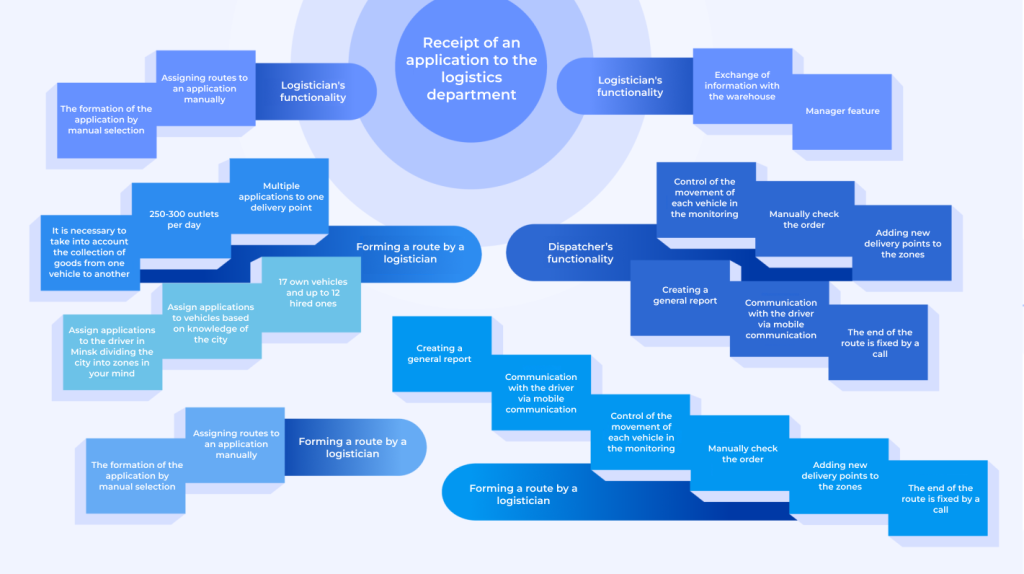
▶ The city of Minsk was divided into conditional zones by a logistician + delivery to the regions. The dispatcher tracked visits to retail outlets through monitoring and checked the order, while he had to select each car separately.
▶ In the list, the addresses had only attributes: order composition with weight, product group, list of products.
▶ Orders were distributed to the driver manually, taking into account the available data in the orders.
▶ The logistician, guided by his experience, manually selected from the list a number of addresses that, in his opinion, seemed optimal when drawing up a route for a particular driver and car. This process was repeated until all orders were distributed to vehicles.
▶ After “cutting” orders in the warehouse, the logistician re-checked the optimal loading of the vehicle.
▶ The logistician prepared an Excel document for the warehouse, in which he indicated all the parameters manually: driver, start of loading, arrival at the first point, waybill, city and note, then sent it by e-mail.
▶ Next, a route sheet for the warehouse was generated, which contained a list of addresses in the required sequence to visit and order information for each address.
▶ The driver left for loading at the specified time, received the goods, route sheet and invoices.
▶ The driver performed tasks along the route without any automated control and provided the logistician with information about the end of the route using mobile communications.
What’s wrong?
▶ A large amount of information is not digitized and the logistician must keep it in mind.
▶ Distribution of orders takes a lot of time and is done manually.
▶ The priority of routes is assigned manually, based on the knowledge of the logistician.
▶ From time to time, drivers drive to nearby points.
▶ Attendance and queue control is done manually.
▶ There is no exact time required for unloading at a point.
▶ Drivers can change the route to the one they are used to; there is no control over driving style and fuel consumption.
▶ The logistician needs to take into account a large amount of data, which in turn entails errors.
▶ There is no clear division of Minsk into delivery zones.
▶ There is no possibility of automatic plan-fact analysis and other necessary analysis tools.
▶ The driver is provided with a printed route sheet.
▶ Route sheets is filled out manually.
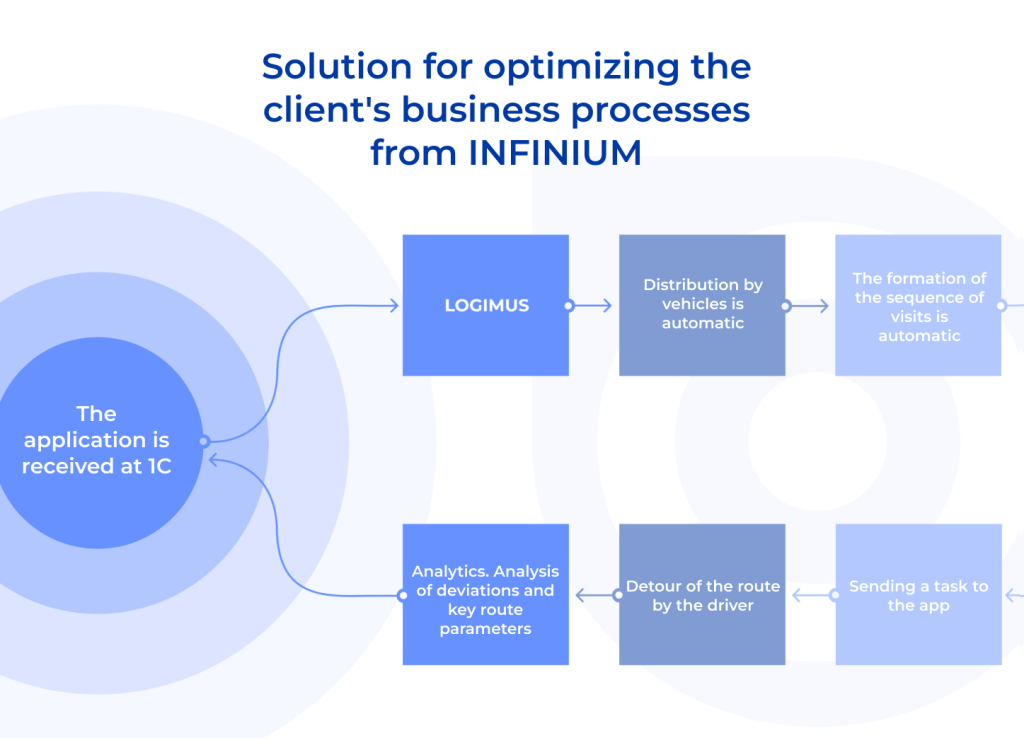
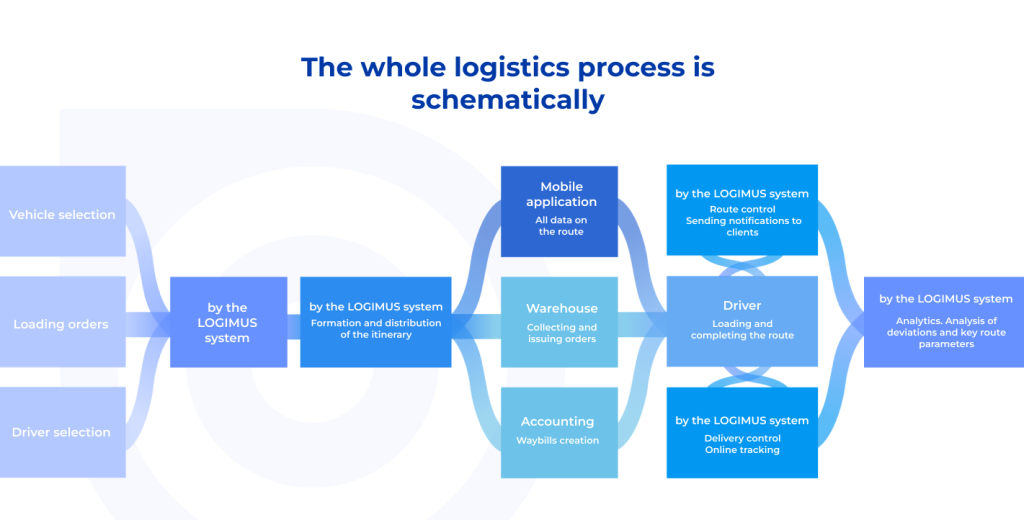
The INFINIUM LOGIMUS system allowed to:
- Optimize route construction
- Set up your own priorities to form a route depending on variables
- Automate the route creation process (with minimal human resource participation)
- Optimize costs and expenses by reducing mileage, managing the existing fleet and route logistics
- Monitor compliance with the plan – fact of the route
- Be able to set key parameters along the route and monitor their compliance (for example, time deviation, gasoline consumption, delivery costs) in terms of plan/actual
- Collect up-to-date data on customer coordinates and operating hours
- Conduct analytics based on collected data
- Save logistician time, the system distributes routes in less than one minute
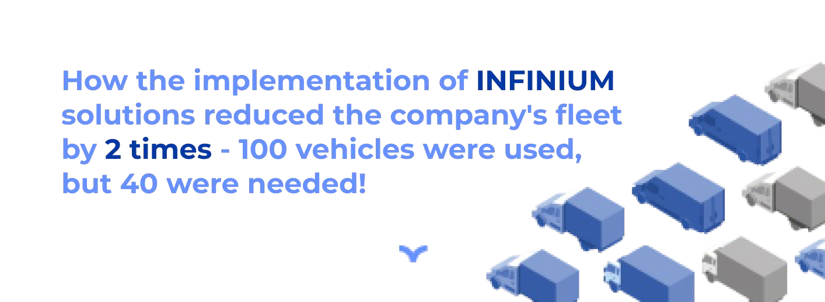
- Reduce the cost of using transport by 18.75%
Reduce costs by 37% by building optimal routes.
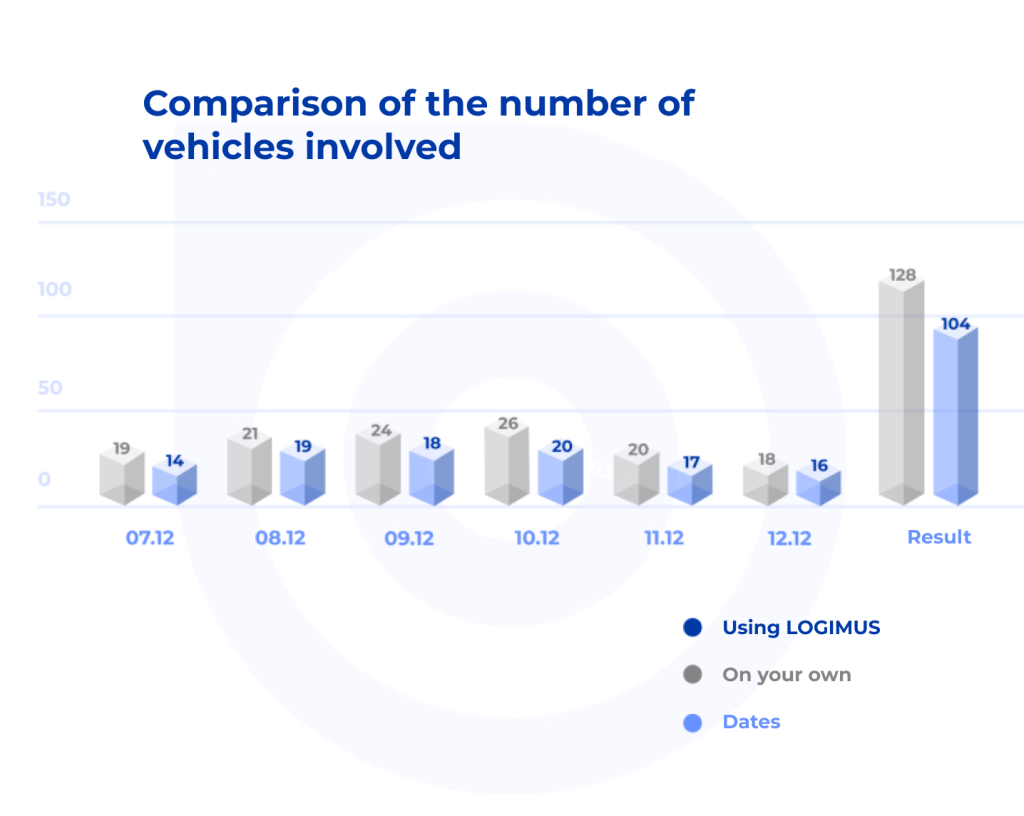
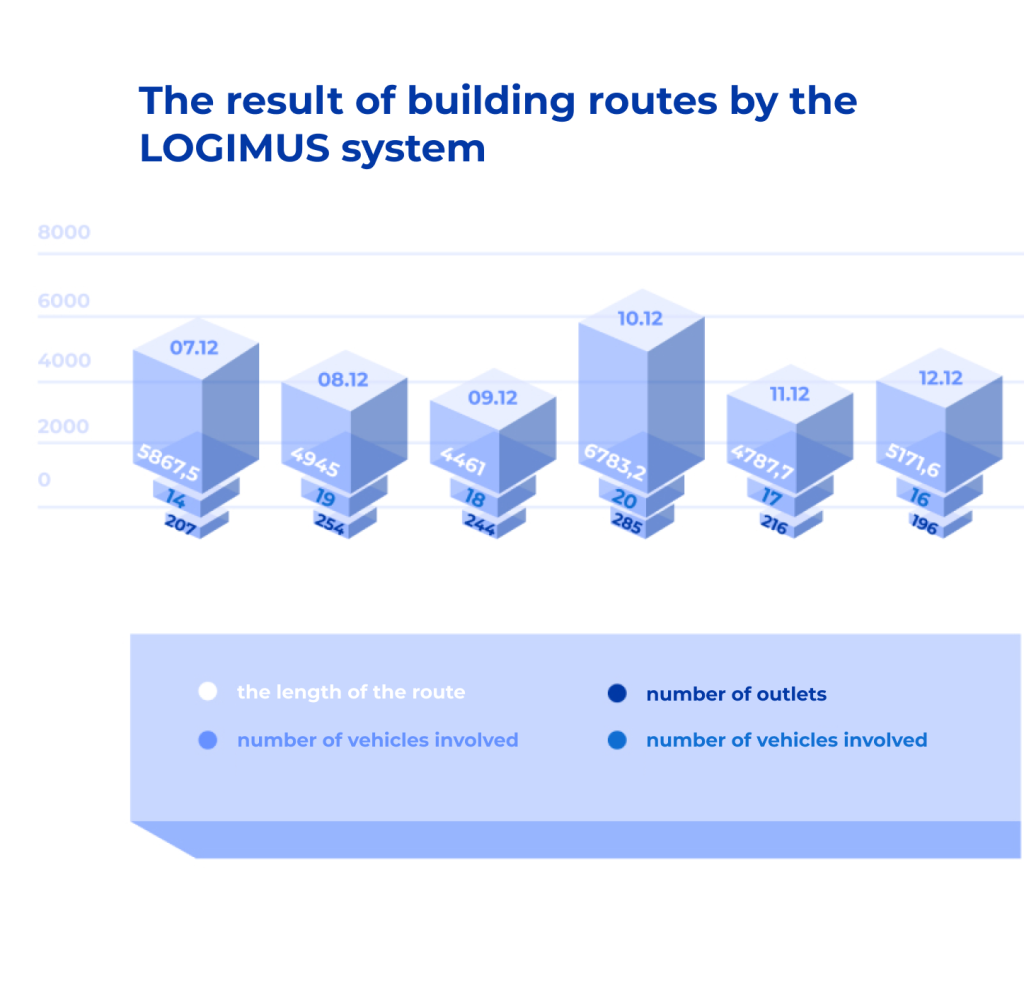
A case study with this client shows the real result of reducing delivery costs by 37%. And today, for every enterprise, regardless of the size of the vehicle fleet, this is an opportunity for real savings and increased profitability. INFINIUM’s expertise allows you to quickly, painlessly and easily implement your innovative solutions into the business processes of any company with tangible results from the first days of implementation.