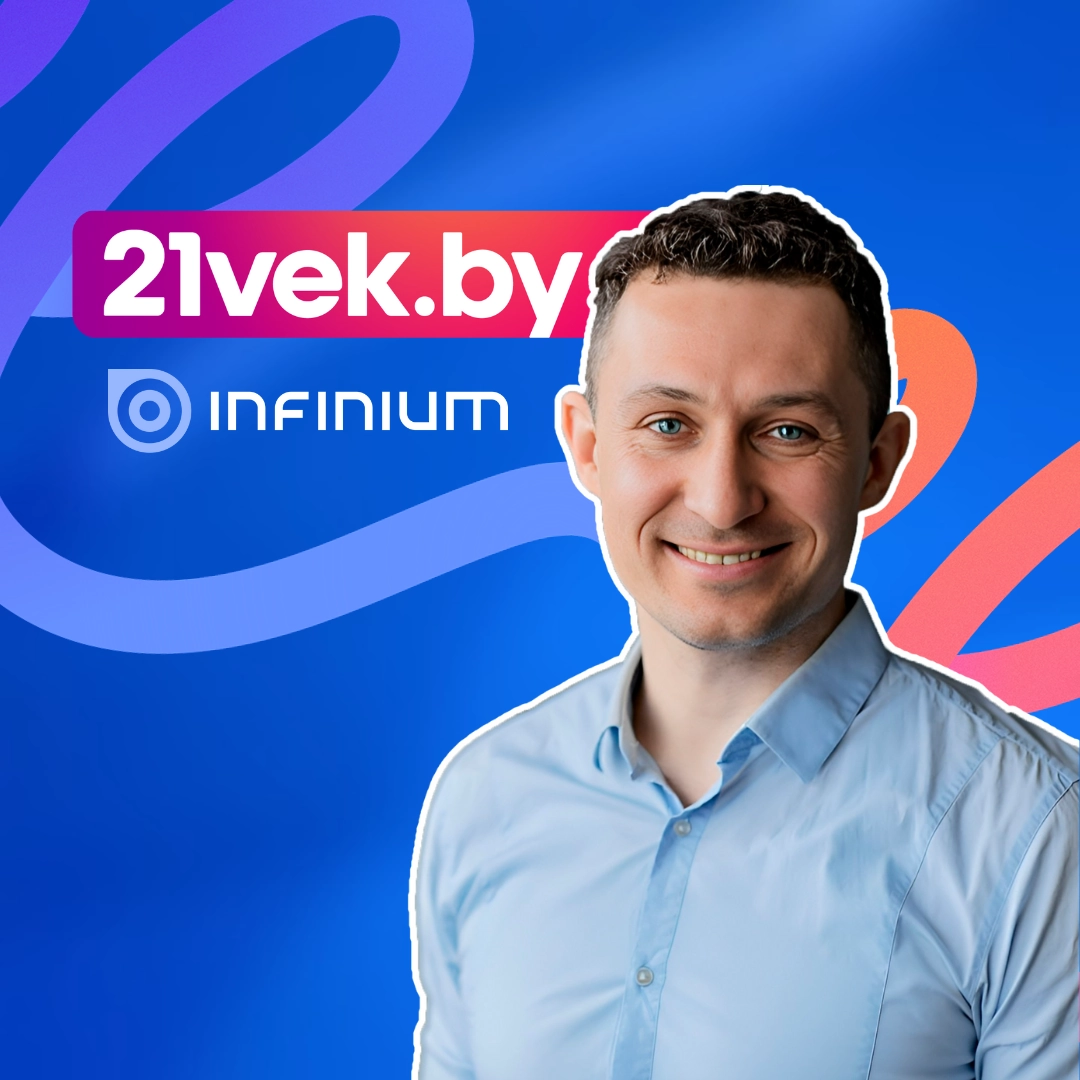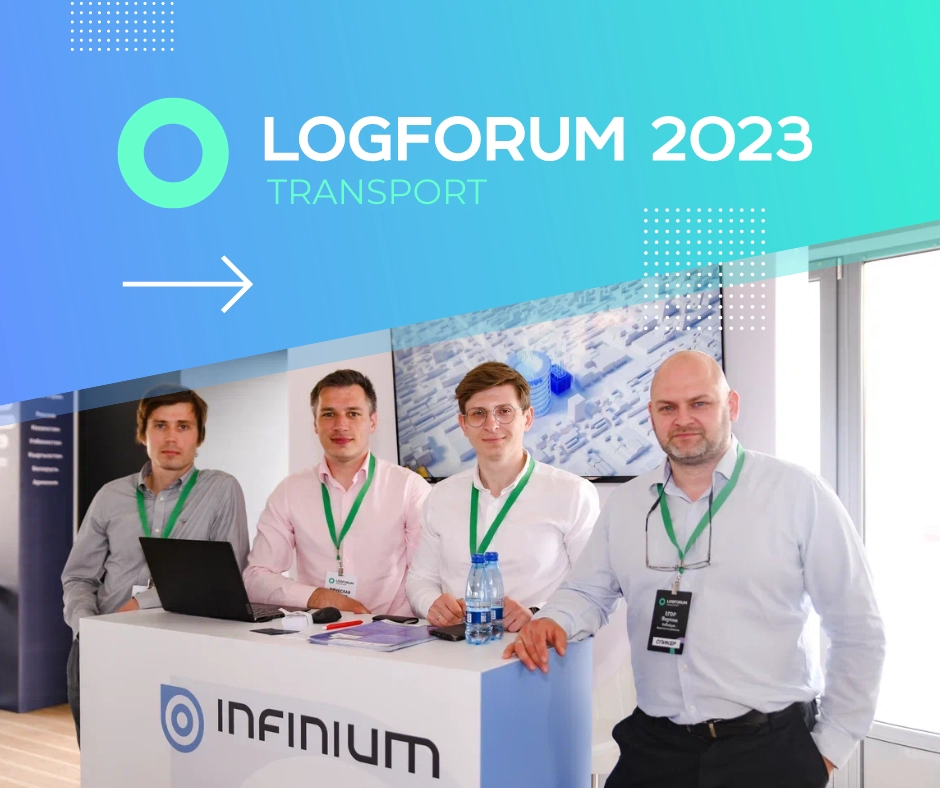


Mike Dedunovich, the founder of BelTransSputnik, Infinium and the OptiDriving system, shared his expert opinion and many years of business experience with the Officelife.media information portal.
The problem of drivers leaving for the EU has been acute in Belarusian companies for many years. The driver shortage in Europe will soon reach 2 million. In Poland alone there are more than 80 thousand vacancies. Recently, the situation has become even more complicated by the fact that Russia has also begun to attract Belarusian drivers with increased salaries in a heated economy.

It has reached the point that many Belarusian companies, from international carriers to E-commerce, have few old, experienced drivers left. Newbies are put behind the wheel, they gain experience and still look abroad. In fact, the typical career path of a young driver in Belarus looks like this: tractor (1 year, Belarus) – VW Caddy E-commerce (1 year, Belarus) – Scania R TIR (1 year, Belarus) – Scania R TIR (Poland).
HOW BIG DATA LEARNED TO “CALCULATE” EFFECTIVE DRIVERS

So far they are trying to solve the problem by lowering the requirements for age and experience. But recently there has been a “light at the end of the tunnel” – IT can save the situation. No, no, we are not talking about self-driving cars without a driver. It will come, but not soon. We are talking about the opportunity to increase the income of drivers in Belarus without increasing the costs of the enterprises where they work.
And this “miracle” has a mathematical basis. In Belarus, a database of about 100 thousand anonymous drivers has recently “ripened” on the roads over 20 years. The so-called Big Data has become so multifaceted that Data Mining analysis methods have become applicable to it.
What did you find out? It turned out that different drivers perform the same work at different costs. One drove the same car with the same load, traffic, pace a section of road with a cost of 100 rubles, and the other – 120 rubles. Algorithms have found common behavior patterns of effective drivers. We trained the OptiDriving system and turned it into an “ideal driver” who absorbed the experience of 100 thousand colleagues. She can now objectively evaluate each driver against the rest of the industry. But the main thing is that it can teach the driver to drive more economically.
Why were previous generation systems (ecodriving) wrong in assessing drivers? They did not take into account the complexity of the route. And here Big Data came to the rescue again: it accumulated for each section of the road up to a million cases of passage by different drivers with different costs. It breaks them down taking into account the terrain by type of car, cargo, traffic, weather, travel time, average speed, etc. And compares the driving of a given driver at each section with many comparable examples of other drivers’ journeys with other costs. This is how an objective rating of the efficiency of travel of each section of the road by different people is formed. And this driver is placed in a certain place in the ranking objectively. This is how complexity is taken into account.
SO HOW WILL THIS HELP RETAIN DRIVERS?

I am sure that in reality the drivers are not eager to leave the country. If they raise their incomes in Belarus, they will not look “to a foreign land.”
Big Data has shown that the objectively real fuel consumption of the average international driver should be approximately 10% lower than the write-off norm. And this is 300 euros per month. Plus, in the industry, on average, 200 euros are written off per car for “burnouts” of fuel associated with inefficient movement. Let me note that here, supposedly “overburns”, but in fact, underfilling of fuel at gas stations in Russia, have been removed from consideration: they can amount to 300 euros on the Belarus-Manchuria round trip.
So why don’t most of today’s drivers achieve fuel economy 10% below normal, even though statistics show it’s possible? A significant portion of drivers lack the experience to make such savings. And the second part needs operational advice: what to do in a traffic situation to save more fuel.
Pilot testing of the system showed that even a driver who has recently started international transportation can easily show savings results at the level of 20% of the best drivers in the industry, if he is given practical and understandable recommendations. Now about the numbers. If you teach a driver to drive correctly and give him the saved 300 euros, plus pay a bonus of 5 euros for each day of efficient driving, then his monthly income will be about 1900 euros. This is almost the level of Polish salaries.
WHAT WILL THIS GIVE COMPANIES?

Where will the bonus of 5 euros per day for efficient driving come from without increasing the costs of the company? It’s simple: each portion of 300 euros of excess fuel burned does not disappear. According to the law of conservation of energy, it flows into excessive wear of the vehicle (tires, disks, pads, engine, gearbox), increased accident rates, etc. This is a loss for the enterprise of about 300–500 euros.
Therefore, if the company helped the driver drive more efficiently and gave him 300 euros in saved fuel, then the second 300–500 euros of reduced wear and tear of the car came to the company “out of thin air.” Win-Win: if it pays the driver 5 euros for each day of efficient driving, it will still remain in the black.
WHAT ELSE IS IMPORTANT FOR THE COMPANY?
In addition to the fact that drivers increase their income without relocating abroad, and enterprises retain the best personnel without increasing costs, there is also an HR component of using OptiDriving.
HR services of the enterprise:
◆ see how each driver in the company performs compared to other drivers in the industry;
◆ see what is the probability of finding better drivers on the labor market;
◆ drivers receive an “X-ray” at the entrance to the company.
Why is this? According to various estimates, there are approximately 10% of people in society who are naturally motivated. Another plus 20% are deeply adequate people who, with the right approach, will also respond to motivation. The task of the HR services of any enterprise is to filter candidates until 100% of the employees in the workforce belong to the 30% indicated above.
And the task of applied researchers is to give drivers, managers, instructors and HR the capabilities of OptiDriving, when everyone realizes their aspirations without compromising others.