

Does an impressive view always equal an impressive essence?
When looking for ways to save on delivery processes, there is a belief that a larger number of delivery points, which are concentrated in a zone and assigned to the driver, is a great benefit for the company. The bottom line is that drivers do not cover a huge mileage, and hence there is already a noticeable saving, at least on fuel and lubricants.
We agree that clustered routes look very impressive visually on the map, but do they have the same effect regarding the goods delivery processes themselves?
To understand the benefits of clustering, you need to understand the algorithm for constructing clustered routes.
Before the advent of clustering, there was a “Zoning” tool – dividing all delivery addresses into zones so that the distance between points was as small as possible. The tool worked like this: the algorithm creates small zones and includes the entire company’s fleet in the delivery process. What effect was achieved:
▶ the distance from one point to another was shorter
▶ drivers spent less time in traffic jams
▶ the forecast of their arrival time was easier to form
▶ within a zone it was easier to change the order of visiting points, provided that the client wants to reschedule the delivery time
It should be understood that zoning is performed independently of routing. One algorithm divides applications into zones, and the other creates optimal routes for drivers within them.
Disadvantages of zoning
At some point, it became obvious that some of our clients, wanting to have the most efficiently built delivery algorithms, created zones incorrectly.
For example, there were companies that did this on the basis of time intervals, reasoning like this: “Requests that coincide approximately in time should be served by one driver.” But in reality it turned out that he could not be at several points at the same time, and accordingly the stated delivery times began to slip.
Not everyone took into account the category of their vehicles when zoning. For example, the client did not include vehicles in the zone or simply did not have those in his fleet that were required to deliver large cargo to the point. This led to the fact that when planning routes, due to the discrepancy between the goods and the capacity of the vehicle, some applications were left without an assignment to a driver.
The biggest misconception was that customers had hope that the zones would definitely reduce the total mileage traveled by the fleet, which is far from their expectations. Why? Let’s imagine that a company has twenty points lined up in an elongated route and, as practice has shown, the five drivers serving them will collectively travel fewer kilometers than one or two zone drivers.
An innovative solution for everyone
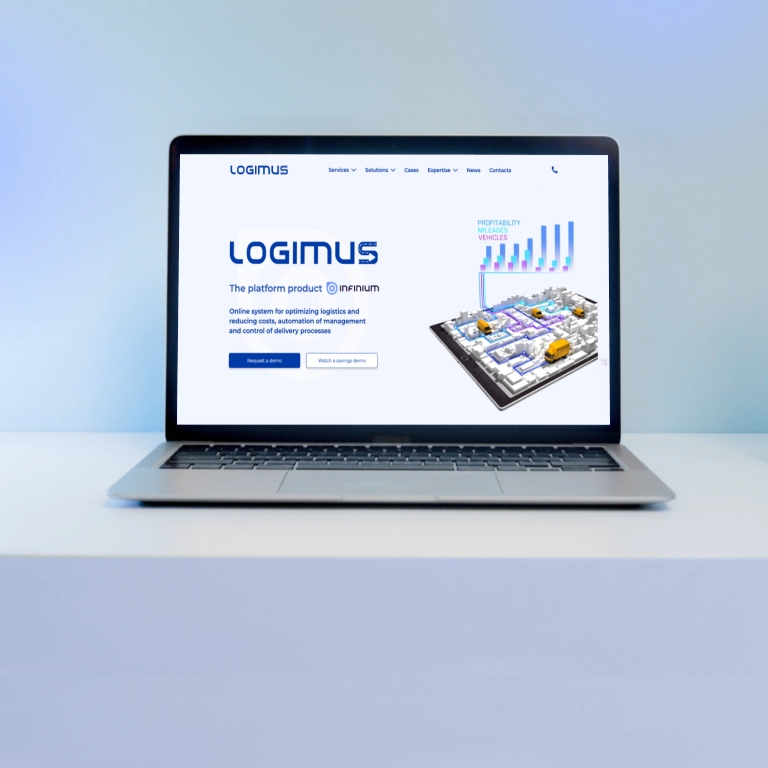
Taking into account all of the above shortcomings, the INFINIUM LOGIMUS team has developed a new algorithm “Route denisty”. And, as it turned out, today it has become the most effective and profitable for our clients.What is the difference between the route denisty and zoning?
▶ delivery points are divided into large geofences to accommodate a larger number of nearby addresses (the density)
▶ the number of vehicles involved in delivery logistics is logically reduced
▶ routes are optimized with the greatest efficiency
The uniqueness of the algorithm is due to its action based on Artificial Intelligence, taking into account all current delivery parameters, as well as the entire history of drivers’ movements with all the nuances. The most profitable delivery routes are built taking into account Big Data for 20 years!
The main advantages of the density
During the delivery process, situations often arise when the driver needs to swap several orders, pick up some orders earlier, and some later. This often depends on how busy the client is and rescheduling the pickup time.
The courier is forced to make changes, not to stand waiting at the door, but to go deliver other orders. And here there are two possible options regarding the structure of the route: a compact route, in which all orders are close to each other, or a non-compact one, but the most economical in terms of mileage.
The advantage is that if the route was compact, the courier simply needs to go to the next house/next street and later return to the client. If the route is non-compactly constructed, the driver will have to return to the client from afar, and this will take a long time and, therefore, be expensive.
Another “pro” of compact routes is the situation when delivering groceries to stores, when the driver, having arrived at the store and seeing a line, goes to the next store, hoping that he will be unloaded there quickly and will return to the previous point, when there are no more lines there. will.
Compact route
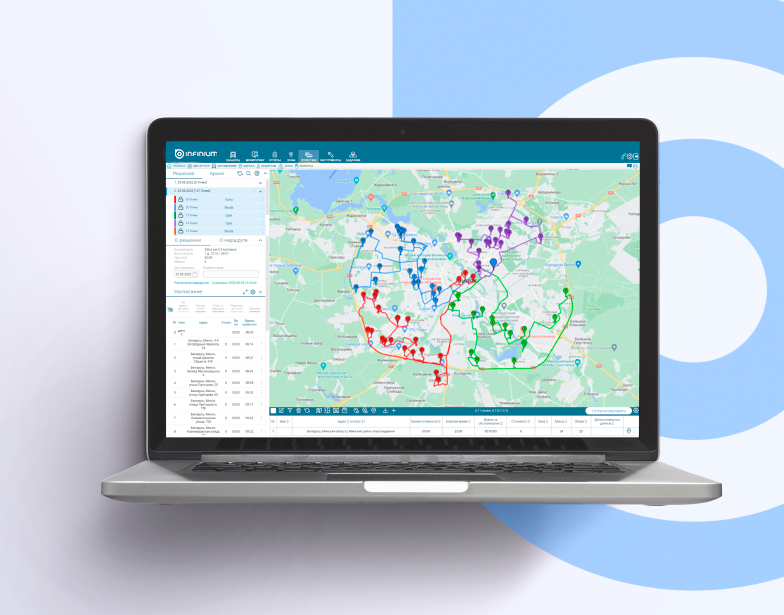
Non-compact route
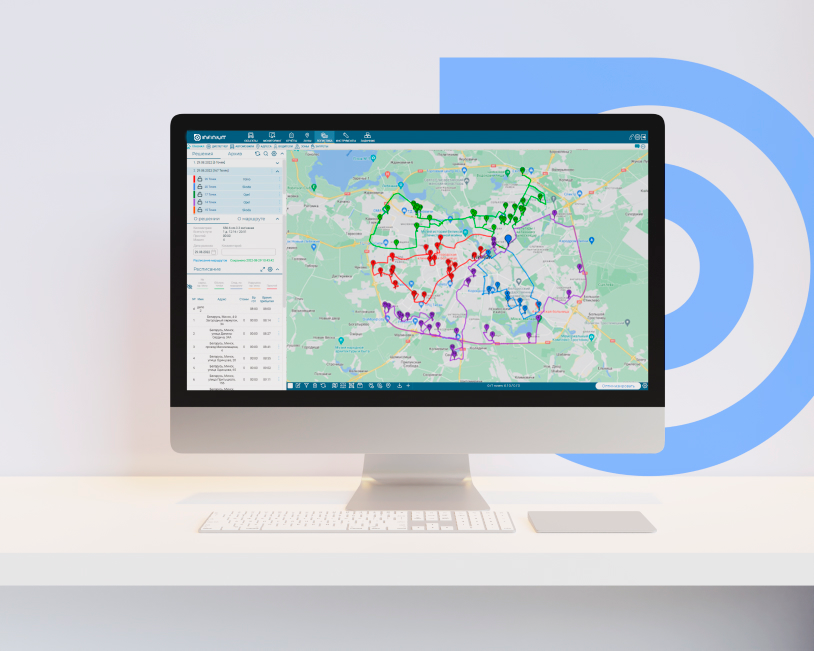
Summary – the need for clustering of routes is due to the high probability of random changes in the route during the detour process. The specifics of urban logistics are “dangerous” due to failures, transfers and many other risk factors. The INFINIUM LOGIMUS Route Cluster solution allows you to avoid most of them, bringing the delivery process to a more efficient and economical level.